Symptoms
All symptoms
Each guide is written for caregivers who observe a change and need help deciding what to write down, what to ask, and when to escalate. No diagnosis. No medical jargon.

 Bathroom UrgencyWhy rushing to the bathroom is one of the highest fall-risk moments for older adults, what urgency looks like at home, and what to tell the doctor.
 Difficulty Getting Up from a ChairWhat difficulty rising from a chair signals about leg strength, joint health, and fall risk in older adults — and what to observe and report to the doctor.
 Confusion and DisorientationWhat confusion and disorientation at home signal about cognitive health, which patterns require urgent evaluation, and how to describe what you observe to the doctor.
 Holding the Counter to Stand UpWhat it means when an older adult grips the counter or chair arm to stand, why it signals lower-limb weakness, and what to write down before calling the doctor.
 Preparing for a doctor appointment about a parent's symptomsWhat to observe, write down, and bring to a doctor appointment when you have noticed a change in an aging parent's movement, behavior, or daily habits.
 Falls and Near-FallsWhat falls and near-falls signal about balance and safety at home, how to recognize the warning patterns before a serious injury occurs, and what to tell the doctor after a fall.
 Falling Asleep Mid-Sentence or Mid-ActivityWhat it looks like when an older adult falls asleep mid-sentence or mid-activity, why it differs from normal tiredness, and what to write down before calling the doctor.
 Foot Dragging While WalkingWhat foot dragging looks like at home, why one foot catching or dragging is a neurological signal, and what to write down before calling the doctor.
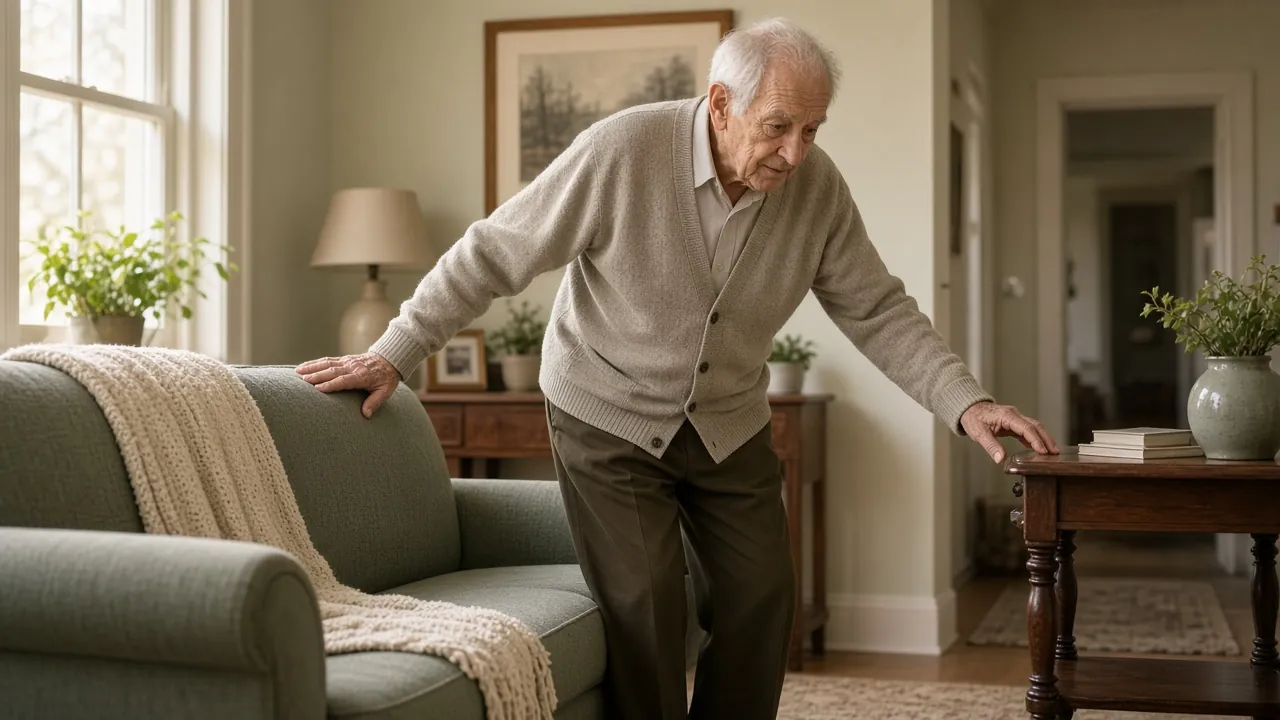 Furniture SurfingWhat furniture surfing looks like at home, why holding walls and furniture is a fall-risk signal, and what to write down before calling the doctor.
 Shuffling Only at NightWhat nighttime shuffling looks like, why an older adult shuffles only at night but walks normally during the day, and what to write down before calling the doctor.
 Refusing to Use a Walker or CaneWhat it looks like when an older adult refuses to use a walker or cane, why refusal is common and what it signals, and how to approach the conversation with the doctor.
 Repeating the Same Story or QuestionWhat it looks like when an older adult repeats the same story or question, why it differs from normal forgetfulness, and what to write down before calling the doctor.
 Shuffling FeetWhat shuffling gait looks like at home, why it is a fall-risk signal, and what to write down before calling the doctor.
 Sleeping All Day — Sleep ChangesWhat excessive daytime sleeping looks like in an aging parent, why it is a medical signal rather than normal aging, and what to write down before calling the doctor.
 Stopping Eating or Losing Interest in FoodWhat it looks like when an older adult stops eating or loses interest in food, why it is a serious medical signal, and what to write down before calling the doctor.
 Wall-Holding While WalkingWhat it looks like when an older adult holds the wall while walking, why it signals a balance problem, and what to write down before calling the doctor.
 Unexplained Weight LossWhat unexplained weight loss looks like in an aging parent, why it is a serious medical signal, and what to write down before calling the doctor.
No matches. Try another word or .