What is happening
When an older adult cannot rise from a chair or toilet without gripping a nearby surface, it signals that the quadriceps and hip flexors no longer have sufficient strength to generate the force needed for a sit-to-stand transition without assistance.
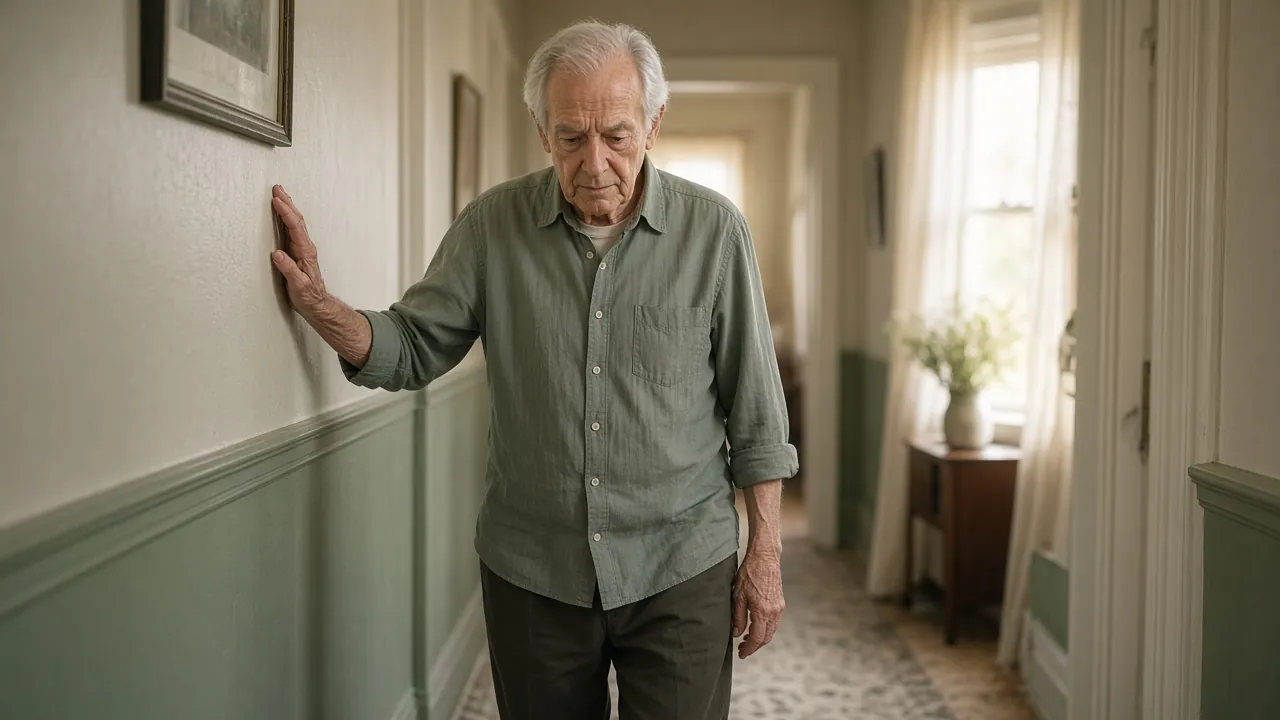
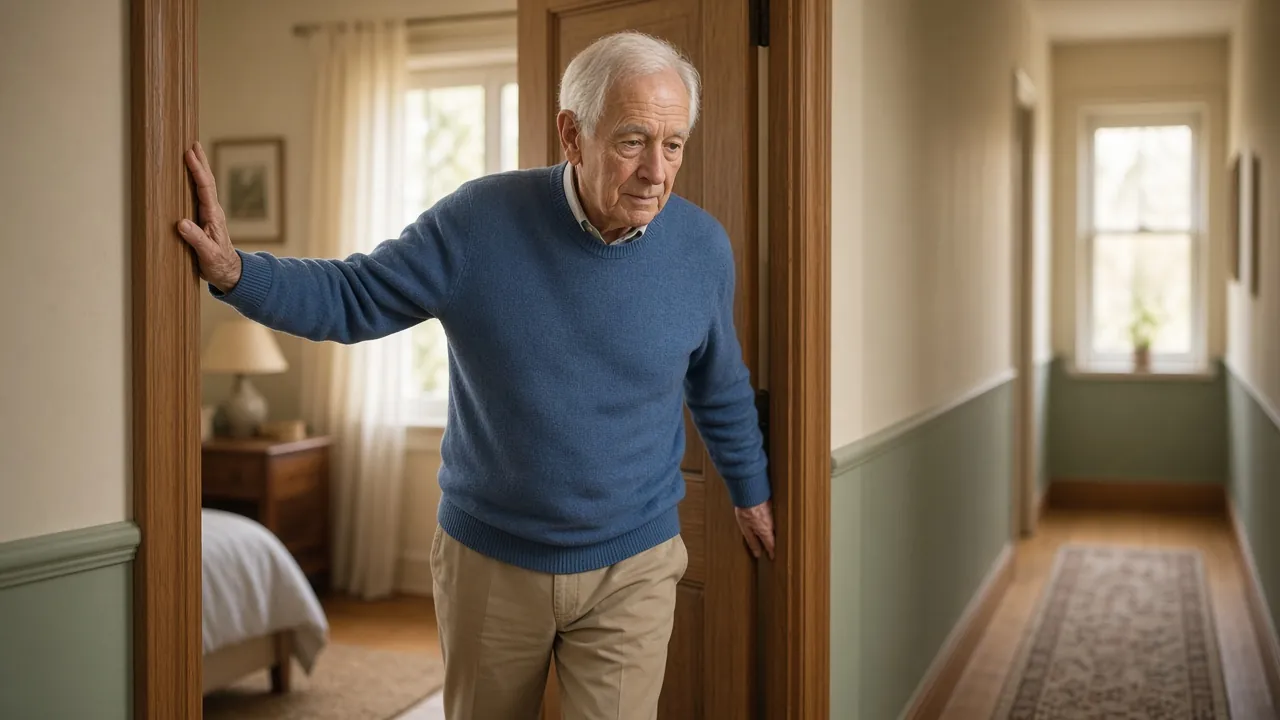
The kitchen is a particularly revealing environment because it requires moving through a confined space, turning, reaching, and carrying — all while the balance system is under load. A parent who manages fine in a straight hallway may show significant balance compensation in the kitchen, where the demands are higher.
What to watch for
- Gripping the kitchen counter, chair arm, or table edge to push up to standing
- Multiple attempts before successfully rising from a low chair
- Rocking forward several times before standing
- Avoiding low chairs, soft sofas, or toilet seats without grab bars
- Visible strain or breath-holding during the stand
- Reaching for a wall or nearby object immediately after standing
Why it matters
Sit-to-stand difficulty is one of the most reliable predictors of fall risk in older adults. It reflects quadriceps weakness, reduced hip extensor strength, and often early deconditioning that responds well to targeted physical therapy.
Counter-holding in the kitchen is often the first visible sign of a balance deficit that has not yet caused a fall. It indicates the balance system is compensating — which means the compensation can fail. The kitchen is also one of the highest-risk environments for falls in older adults, due to wet floors, reaching, and the frequency of use.
Doctor Prep Guide
Why does Mom hold the counter when she stands up?
A step-by-step guide to what counter-holding during standing signals, what to observe, and how to prepare for the doctor conversation.
Read the guide →