CALL 911 OR GO TO THE ER IF YOU SEE ANY OF THESE
- She fainted or lost consciousness after standing
- She fell immediately after standing and cannot get up
- Chest pain, shortness of breath, or palpitations alongside the dizziness
- Sudden severe headache with the unsteadiness
- One-sided weakness, facial drooping, or slurred speech
- Confusion or disorientation that is new
Seven things to write down before you call
Check each item as you note it. The more detail you can provide, the more useful the call will be.
- When it started and how often
Approximately when did you first notice it? Does it happen every time she stands, or only sometimes?
- What happens in the first few seconds
Does she pause and hold, or sway? Does she mention dizziness or lightheadedness? Does she need to sit back down?
- Which situations trigger it most
Worse after sitting a long time, after eating, first thing in the morning, or from low surfaces?
- Leg weakness or stiffness
Does she rock forward to get up? Does she mention leg weakness, heaviness, or stiffness after sitting?
- Near-falls or actual falls on standing
Any stumbles, swaying into the counter, or falls right after standing?
- Recent health, fluid, or activity changes
Eating or drinking less than usual? Recent illness? New or changed medications? Reduced activity?
- Full medication list
All prescription drugs, over-the-counter medications, supplements, and vitamins with doses.
Example notes
- Started about 6 weeks ago. Happens almost every time she gets up from the kitchen chair.
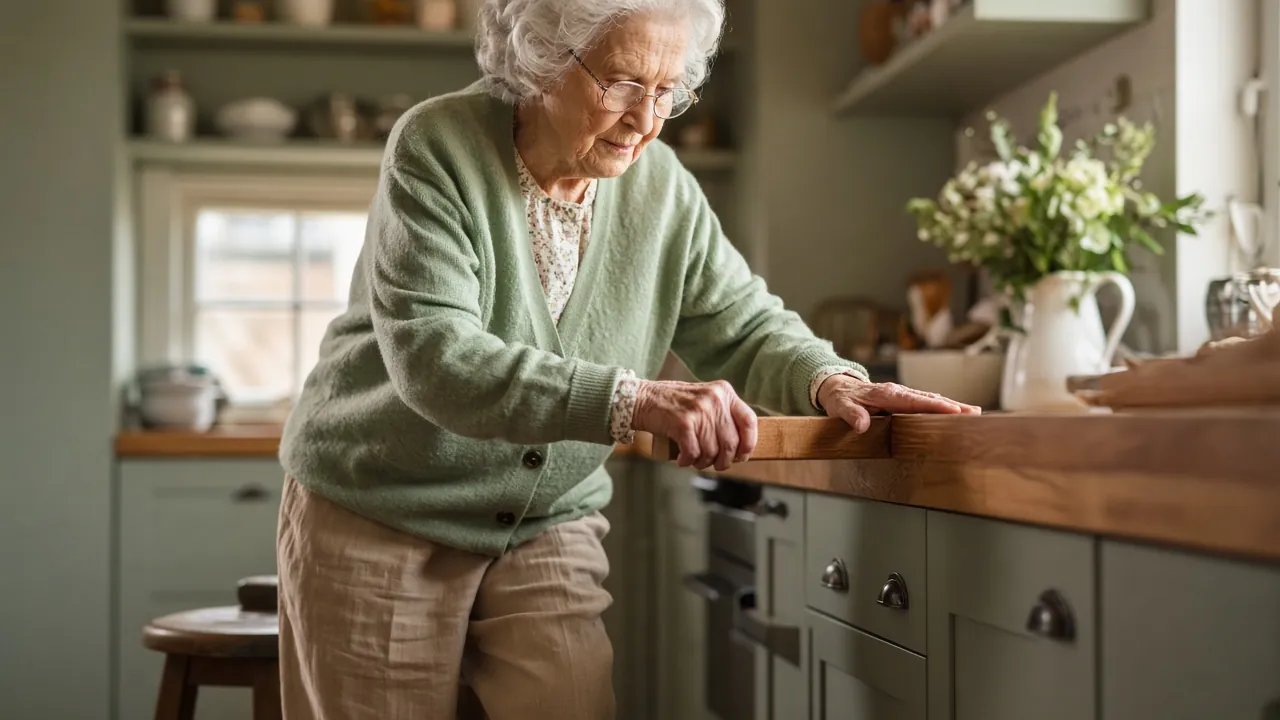
- She grabs the counter and waits about 20 seconds. Says she feels 'woozy' for a moment.
- Worst first thing in the morning and after sitting at the table for a meal.
- Rocks forward 3 times before she can push up. Says her legs feel 'heavy' in the morning.
- Swayed into the counter last week after getting up from the couch. No fall but it scared her.
- Has been drinking less water lately. Started a new blood pressure pill about 2 months ago.
- Amlodipine 5mg, Hydrochlorothiazide 12.5mg, Sertraline 50mg, Vitamin D 1000 IU.
What the doctor is looking for
Counter-holding on standing is a symptom, not a diagnosis. The doctor will use your observations to narrow down the most likely cause. The most common cause in older adults is orthostatic hypotension — a temporary drop in blood pressure when moving from sitting or lying to standing. This is extremely common in older adults, especially those on blood pressure medications, diuretics, or antidepressants, and those who are not drinking enough fluids.
The second most common cause is leg muscle weakness — particularly weakness in the hip extensors and quadriceps that makes the transition from sitting to standing unstable. This is often addressable with physical therapy and targeted strengthening exercises.
The detail that often matters most is the medication list and fluid intake. Many older adults are on combinations of medications that lower blood pressure and are also not drinking enough water — a combination that makes orthostatic hypotension significantly worse. Bringing a complete, current medication list is one of the highest-value things you can do before the appointment.
Sample call script
Copy this script and fill in the brackets before you call. The nurse triage line will ask most of these questions anyway — having the answers ready shortens the call and improves the outcome.
Hi, I'm calling about my mother [Name], DOB [Date]. I've noticed she's been holding the counter or a nearby surface right after she stands up. It started about [timeframe] ago and happens [how often]. She [does/does not] mention feeling dizzy or lightheaded when she stands. It seems worst [specific trigger — morning, after meals, from low chairs]. She [has/has not] had any near-falls or falls right after standing. She [has/has not] had any recent changes in eating, drinking, or activity. She is currently taking [medications]. Can the doctor see her, or is there a nurse I can speak with?
Frequently asked questions
Why does an older adult hold the counter or a surface right after standing up?
Gripping a counter or surface immediately after standing is a compensatory strategy for instability in the first seconds after rising. The most common cause in older adults is orthostatic hypotension — a temporary drop in blood pressure when moving from sitting or lying to standing, which reduces blood flow to the brain and causes lightheadedness or unsteadiness. Other causes include leg muscle weakness (especially hip extensors and quadriceps), inner ear balance problems, and medication side effects. It is not a normal part of aging and is worth reporting to a doctor.
What is orthostatic hypotension and how does it cause unsteadiness on standing?
Orthostatic hypotension is a drop of 20 mmHg or more in systolic blood pressure (or 10 mmHg in diastolic) within three minutes of standing. When blood pressure drops that quickly, the brain receives less blood flow for a few seconds, causing lightheadedness, dizziness, blurred vision, or unsteadiness. Older adults are more susceptible because blood pressure regulation slows with age and because many common medications (blood pressure drugs, diuretics, antidepressants) lower blood pressure further. Dehydration worsens it significantly.
Is holding the counter when standing up dangerous?
The counter-holding itself reduces fall risk in the moment. The concern is what it signals: a pattern of instability on standing that, if unaddressed, increases the risk of a fall when a surface is not available — for example, standing up in the middle of the night to use the bathroom. Falls immediately after standing are a common and serious injury mechanism in older adults. The behavior warrants a doctor conversation even if no fall has occurred.
When should I call the doctor about a parent holding surfaces when standing?
Call if the behavior is new, getting more frequent, or accompanied by dizziness, lightheadedness, leg weakness, or near-falls. You do not need to wait for a fall. If Mom mentions that the room spins or goes dark when she stands, or if she has actually fallen right after standing, call the doctor the same day. For gradual onset without falls, a scheduled appointment within a week or two is appropriate.
What home changes reduce fall risk from unsteadiness on standing right now?
While waiting for the doctor appointment: encourage her to rise slowly — pause at the edge of the chair for 10–15 seconds before walking; ensure she is drinking adequate fluids throughout the day (dehydration is a major contributor); raise low chairs and toilet seats to reduce the effort of rising; remove rugs and obstacles near chairs and the toilet; and ensure nighttime paths to the bathroom are well lit. A physical therapist can assess leg strength and recommend specific exercises to improve sit-to-stand stability.