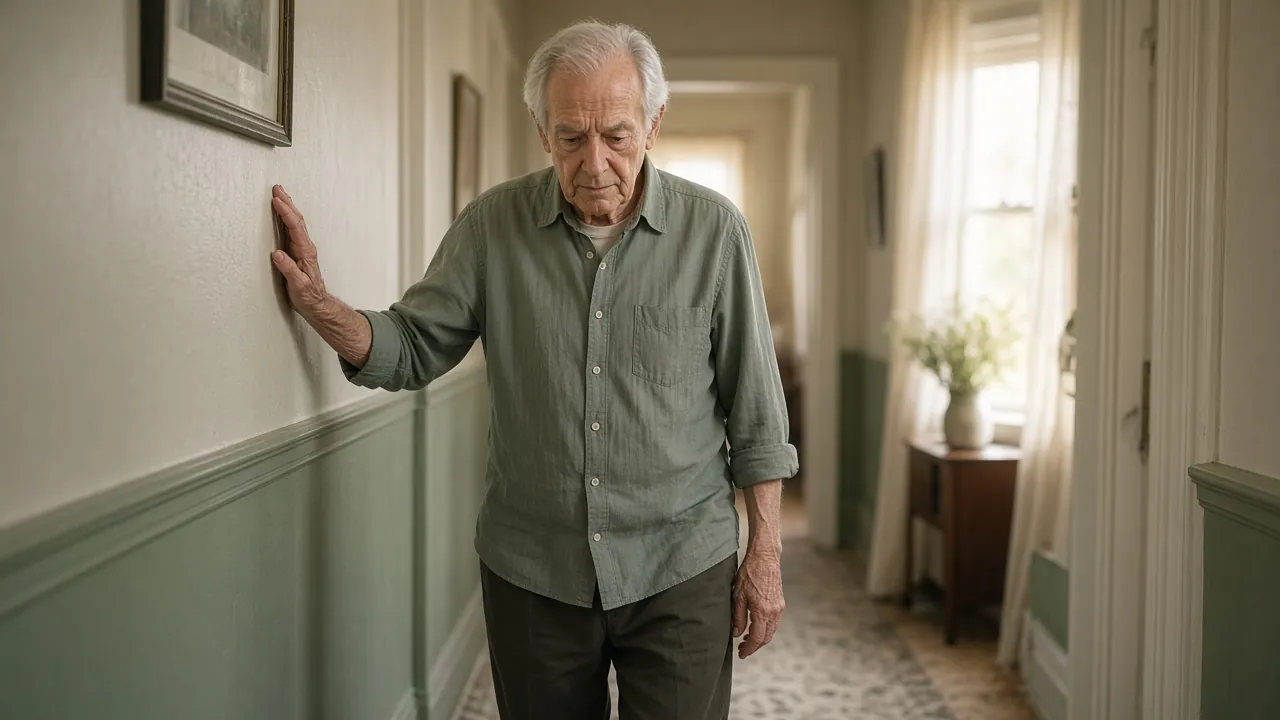
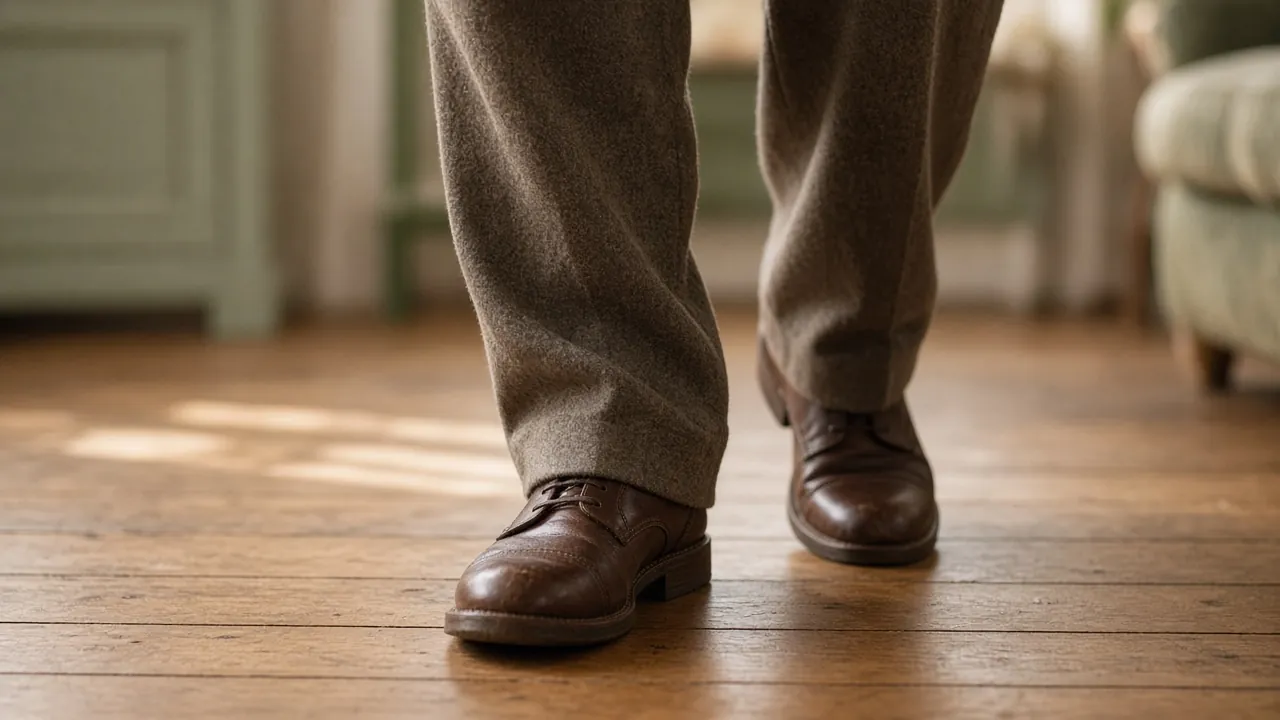
What shuffling feet looks like at home
Shuffling gait is when a person's feet drag or slide along the floor rather than lifting clearly with each step. The stride becomes shorter. The person may lean slightly forward, walk more slowly than before, or seem to hesitate before starting to move — especially at doorways or when transitioning from one surface to another.
Caregivers often describe it as: "She doesn't pick up her feet anymore," "He shuffles around," "She's almost falling over when she walks," or "He walks like he's much older than he used to."
Shuffling is different from simply walking slowly. A slow but steady gait with clear foot clearance is different from a shuffle where the feet barely leave the ground. The distinction matters because shuffling significantly increases fall risk — a small rug, a threshold, or a slightly uneven surface can catch a dragging foot.
Why it matters
Shuffling gait is a fall-risk signal. The National Institute on Aging reports that more than one in four people age 65 and older fall each year, and that gait and balance changes are among the contributing factors. A caregiver who notices shuffling is observing something clinically relevant — not just a sign of "getting older."
Shuffling can have many causes: neurological conditions, musculoskeletal changes, medication side effects, vision changes, footwear problems, or home hazards. The cause matters for treatment, but identifying the cause is the provider's job. The caregiver's job is to observe, record, and report.
What should I write down before calling Mom's doctor about shuffling feet?
A 7-point caregiver observation checklist — when it started, what the walk looks like, falls and near-falls, medications, and a sample note for a doctor call or patient portal message.
Read the ChecklistWhen to call the doctor — and when to call 911
If the shuffling has developed gradually over weeks or months, schedule an appointment with the primary care provider and bring your written observations. If the shuffling has appeared suddenly — within hours or days — or is accompanied by any of the following, seek emergency care immediately:
- Sudden severe weakness in one or both legs
- One-sided weakness, facial drooping, or slurred speech
- Sudden confusion or difficulty understanding
- A fall with head impact or loss of consciousness
- Inability to get up from the floor
- Chest pain or trouble breathing
When in doubt, call 911 or your local emergency number. It is always better to have a provider evaluate a sudden change and rule out a serious cause.
Medical disclaimer: This page is an informational resource for caregivers. It is not a substitute for professional medical advice, diagnosis, or treatment. Always consult a qualified healthcare provider. If you observe sudden severe weakness, stroke-like symptoms, a fall with head impact, or inability to get up, call 911 immediately.