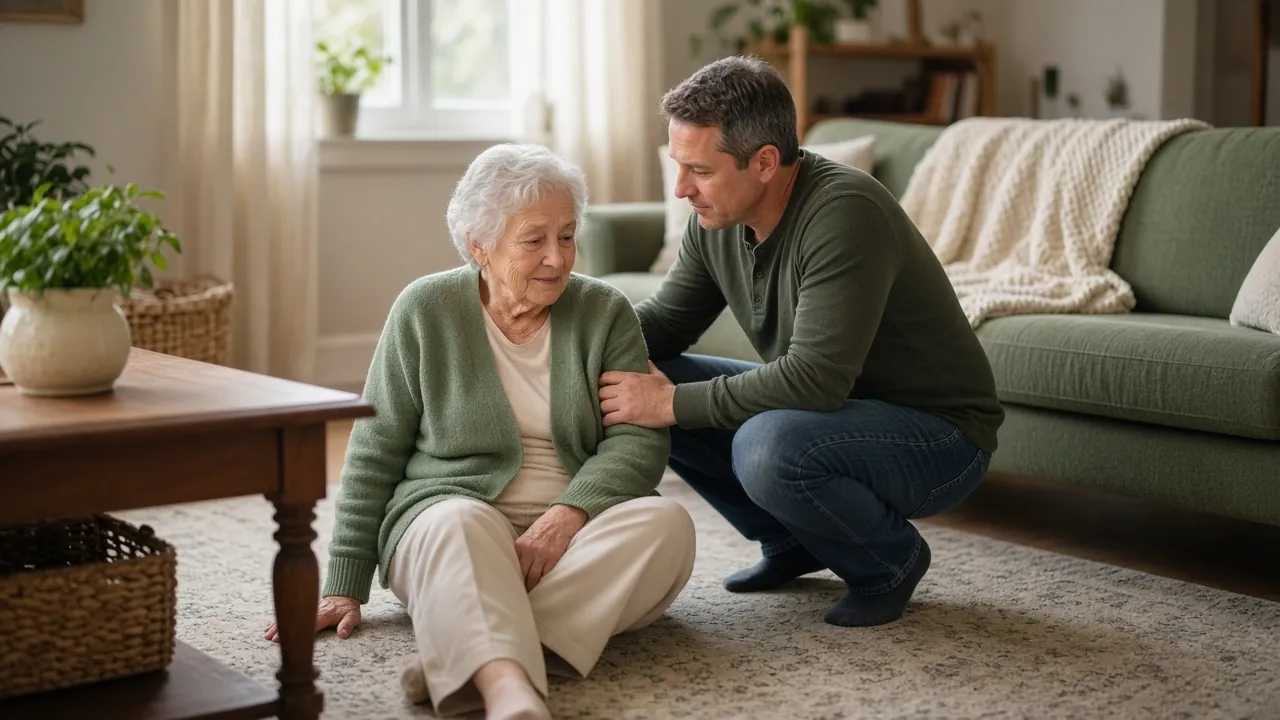
Why falls are not random events
A fall in an older adult is rarely a random accident. It is typically the visible result of an underlying balance deficit, gait change, medication effect, or environmental hazard that has been building over time. The fall itself is the moment the system failed — but the conditions for failure were present long before.
Near-falls — catches, stumbles, or moments where your parent grabbed something to avoid going down — are equally significant. They indicate the same underlying deficit and deserve the same medical attention as an actual fall.
The most important thing a caregiver can do after a fall or near-fall is document what happened and report it to the doctor with specific details — not just "Dad fell."
Warning patterns that precede falls
- Furniture surfing — trailing hands along walls and countertops while moving through the home
- Shuffling gait — reduced step height, shorter stride, feet that barely clear the floor
- Hesitation at doorways, stairs, or transitions between floor surfaces
- Difficulty rising from chairs or the toilet without using both arms
- Rushing to the bathroom with reduced balance control
- Reduced walking speed, especially in unfamiliar or low-light environments
What to do immediately after a fall
If your parent has fallen, first assess for injury before moving them. If they cannot get up, are in significant pain, or you suspect a hip fracture or head injury, call 911. Do not attempt to lift them without assistance.
If the fall appears minor and they can move without severe pain, help them to a safe position and note the details: where they were, what they were doing, what time it was, whether they lost consciousness, and what they say happened. These details are what the doctor needs.
Doctor Prep Guide
What should I tell the doctor after Dad fell?
A step-by-step checklist of what to document and report so the physician can assess fall risk and determine next steps.
Read the guide →