What is happening
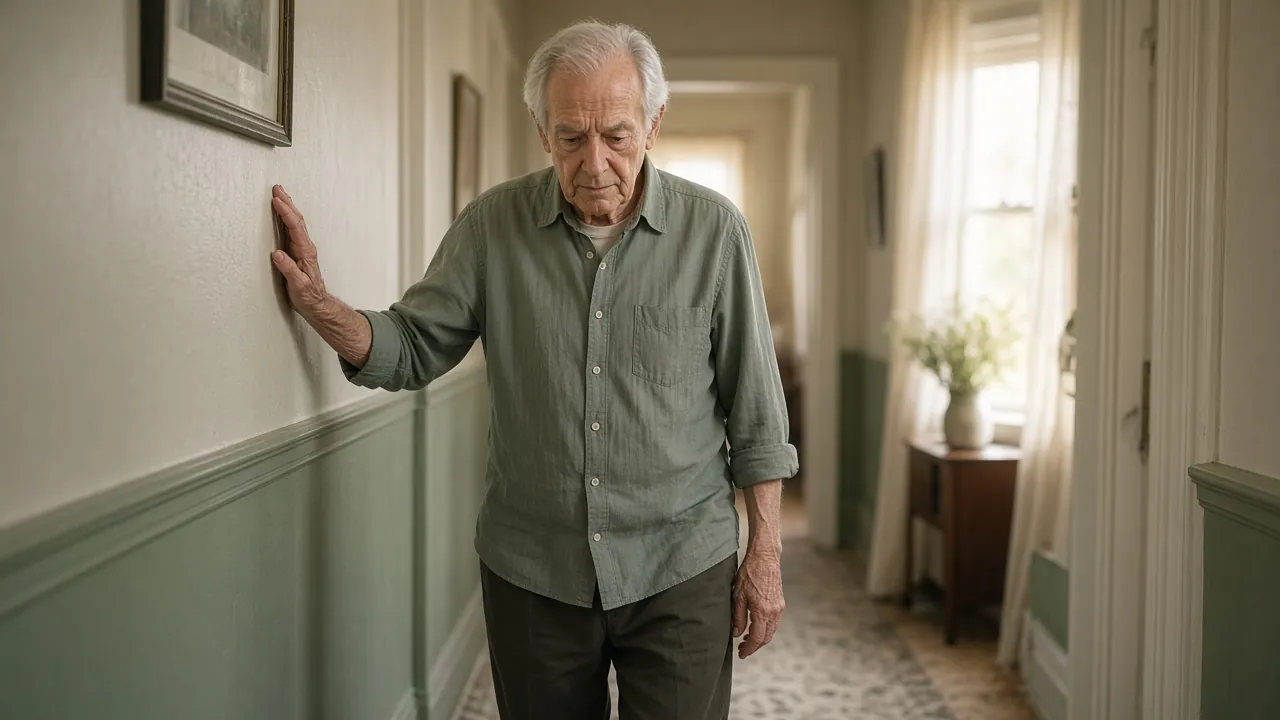
When an older adult trails a hand along the wall while moving through the house, it is not a habit — it is a compensation. The nervous system is using the wall as a balance reference because it no longer fully trusts the body's own balance signals.
The vestibular system, proprioception (the body's sense of its own position in space), and lower-limb strength all contribute to balance. When any of these degrades — through inner ear changes, peripheral neuropathy, muscle weakness, or neurological conditions — the brain compensates by seeking external reference points. Walls and furniture become those reference points.
What to watch for
- Trailing a hand along hallway walls while walking
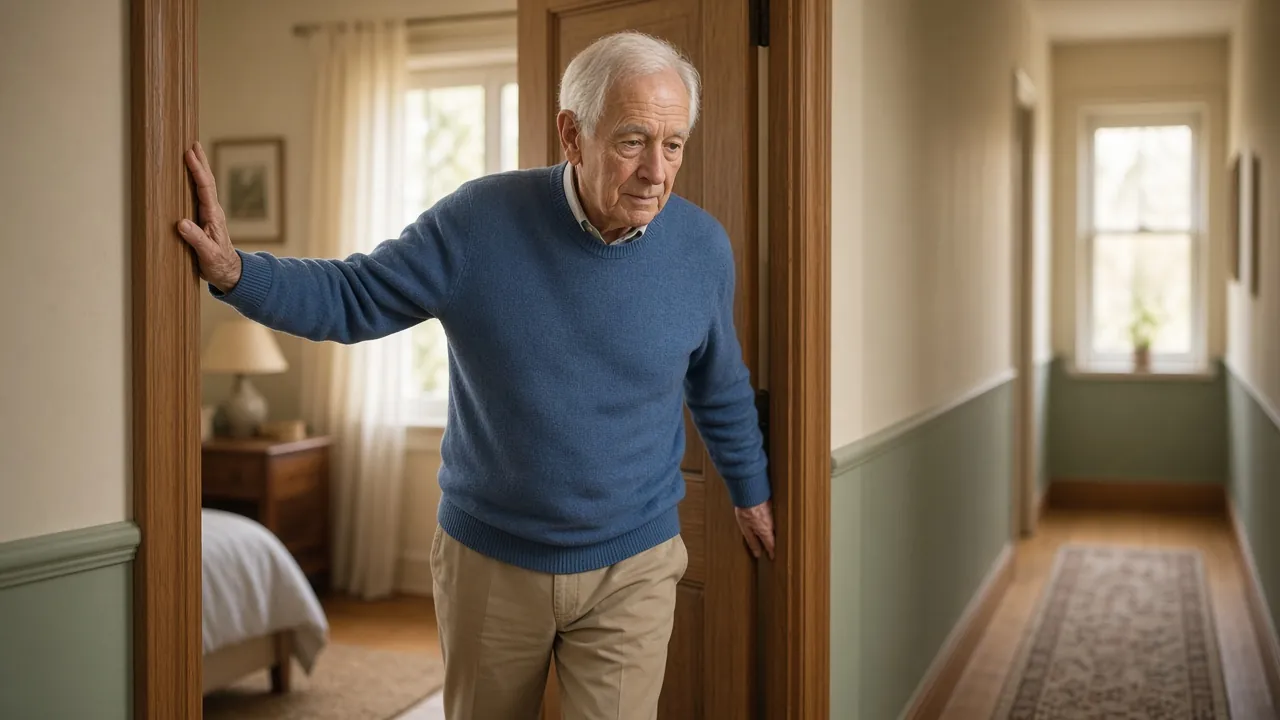
- Pausing at doorways to grip the frame before crossing
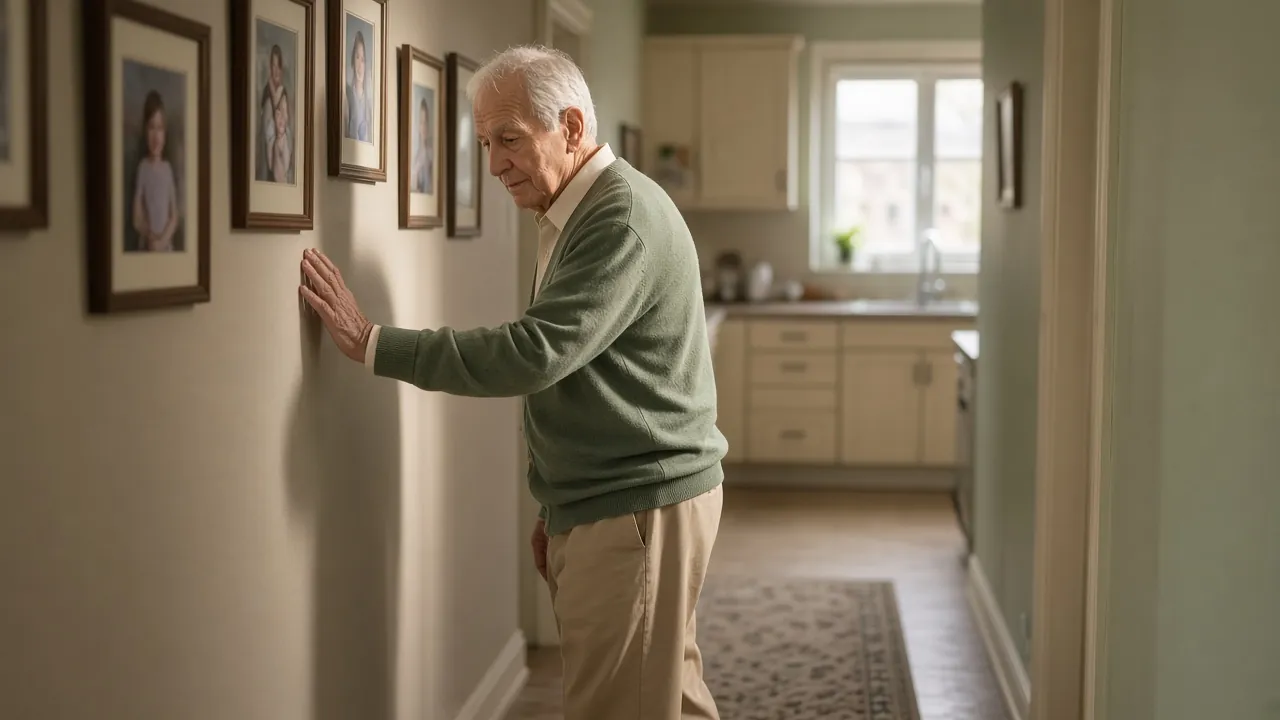
- Touching walls or furniture in every room they pass through
- Reluctance to walk in open spaces without something nearby to hold
- Slower, more deliberate gait in unfamiliar environments
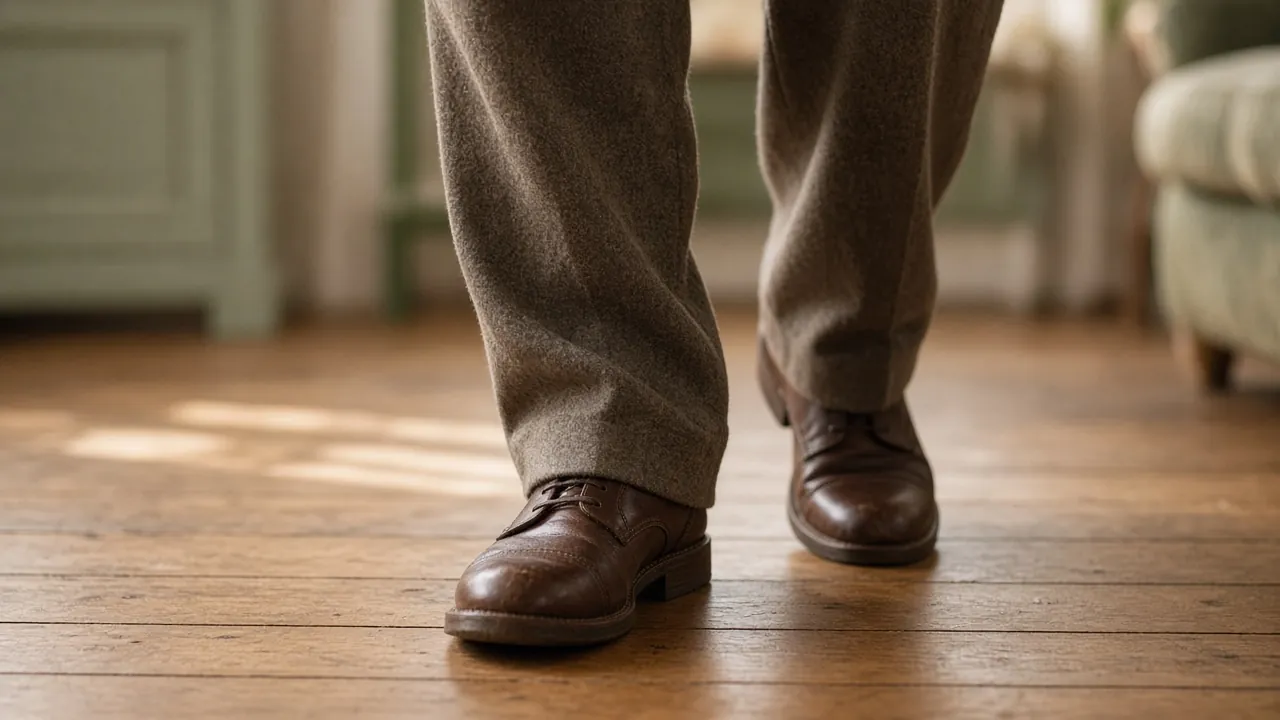
- Wider stance than usual while standing still
Why it matters
Wall-holding is a visible sign that the vestibular system, proprioception, or lower-limb strength has declined enough that the brain is actively compensating. It is a fall-risk signal that precedes a fall — often by months.
The fall happens at the moment the compensation fails — when your parent reaches a doorway with nothing to hold, moves faster than the compensation allows, or encounters an unexpected surface change. Identifying wall-holding as a fall-risk signal before a fall occurs is the window for intervention.
Doctor Prep Guide
Why does Dad hold the wall when he walks?
A step-by-step guide to what wall-holding signals, what to observe, and how to prepare for the doctor conversation.
Read the guide →