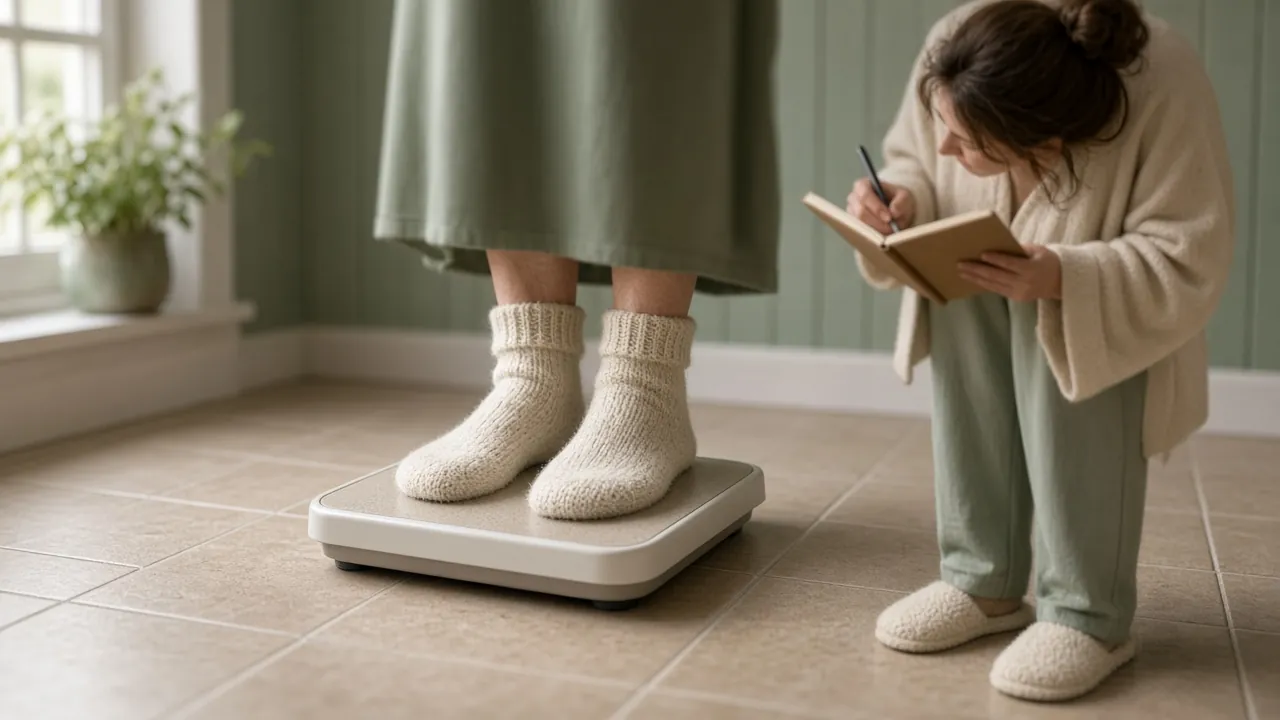
What is happening
When an older adult loses weight without trying — without a change in diet or activity — it is one of the most important signals a caregiver can bring to a doctor's attention. Unintentional weight loss in older adults is associated with a wide range of underlying conditions, many of which are treatable when caught early.
The change is often most visible in clothing. A parent whose clothes fit well six months ago now has loose waistbands and shirts that hang differently. Portions at meals are consistently smaller. Food is left on the plate more often. The refrigerator has more leftovers. These observations are more reliable than self-report — older adults often underestimate how little they are eating.
What to watch for
- Clothes that fit loosely that previously fit well
- Visible changes in face, arms, or legs that appear thinner
- Eating less at meals without an obvious reason
- Commenting that food tastes different or has no taste
- Fatigue or weakness that seems to be increasing
- Skipping meals or showing less interest in food than before
Why it matters
Unintentional weight loss of 5% or more of body weight in 6–12 months is a clinical red flag. It can indicate malignancy, depression, thyroid dysfunction, medication side effects, or early dementia affecting appetite and food recognition.
Unintentional weight loss in older adults is associated with a wide range of underlying conditions, from depression and medication side effects to gastrointestinal disorders and cancer. It is also associated with accelerated functional decline — muscle mass lost during unintentional weight loss is difficult to recover. Early identification and treatment of the underlying cause leads to better outcomes.
Doctor Prep Guide
What should I write down if Mom is losing weight?
A step-by-step guide to what unexplained weight loss signals, what to observe, and how to prepare for the doctor conversation.
Read the guide →