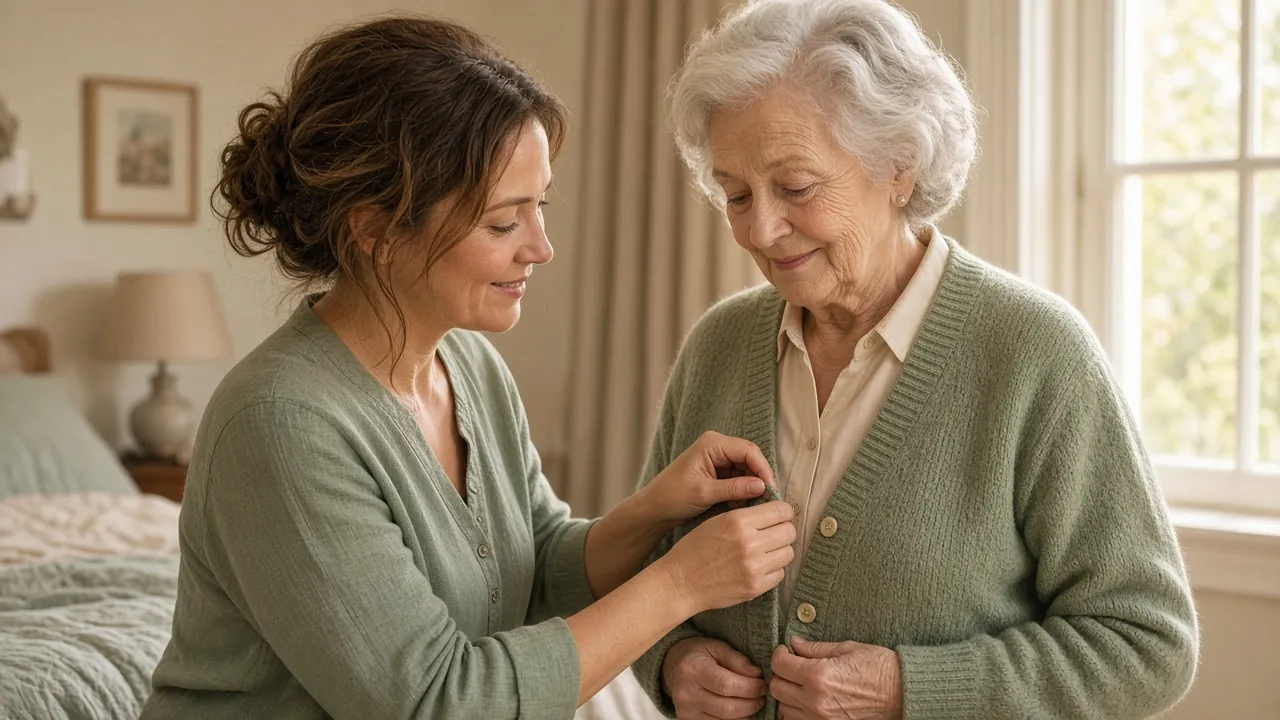
What daily living difficulty looks like at home
The signs are often subtle at first. You notice the same outfit worn on multiple visits. The bathroom smells different. The kitchen is less used than it used to be. Your parent brushes off your concern or says they showered yesterday when the evidence suggests otherwise. These are not signs of laziness or indifference — they are signs that something has changed in your parent's ability to manage tasks that were once automatic.
Daily living difficulties — what clinicians call ADL (Activities of Daily Living) and IADL (Instrumental Activities of Daily Living) impairments — are among the most common and most underreported changes in aging adults. They are underreported because they are private, because your parent may not recognize the change themselves, and because admitting difficulty with bathing or toileting feels like a profound loss of dignity. The caregiver's job is not to force the issue but to observe carefully, document what they see, and bring that information to the doctor.
The cause matters because it determines the response. Difficulty bathing because of hip pain requires a different intervention than difficulty bathing because of early cognitive decline. A fall in the bathroom requires different supports than a general loss of motivation from depression. The doctor cannot determine the cause without specific observations — which is why writing down what you see, with dates, is the most useful thing a caregiver can do before the appointment.
What to observe and write down
Bathing frequency
When did they last shower or bathe? Is there visible evidence of recent bathing?
Clothing changes
Are they wearing the same clothes for multiple days? Do clothes appear soiled?
Body odor
Is there persistent body odor that was not present previously?
Toileting accidents
Have there been any incontinence episodes? Are there signs of accidents in the bathroom or on clothing?
Meal preparation
Are they preparing and eating meals? Is the kitchen being used? Is food expiring unused?
Medication management
Are medications being taken correctly? Is the pill organizer being used?
Mobility during tasks
Do they hold walls or furniture when moving through the bathroom? Have they fallen during a daily living task?
Awareness of difficulty
Do they acknowledge the difficulty or deny it? Do they become defensive when you raise it?
What to do next
Write down what you have observed — specific tasks, specific dates, specific changes — and bring it to the doctor's appointment.
Use the observation checklist →Questions caregivers ask
How do I know when a parent needs help with bathing and personal hygiene?
The clearest signals are visible: body odor that was not present before, wearing the same clothes for multiple days, hair that has not been washed in weeks, or a bathroom that shows no signs of recent use. Your parent may deny the problem or become defensive when you raise it — this is common and does not mean they are being dishonest. Cognitive changes, pain, fear of falling in the shower, and depression all reduce the motivation and ability to manage personal hygiene. Document what you observe with dates and bring it to the doctor.
What should I write down before talking to the doctor about daily living difficulties?
Record the specific activities your parent is struggling with (bathing, dressing, toileting, preparing meals, managing medications), how long the difficulty has been present, whether it is getting worse, and any falls or near-falls that occurred during these activities. Note whether your parent is aware of the difficulty or denying it. Also record any pain complaints, cognitive changes, or new medications that coincide with the decline. This information helps the doctor determine whether the cause is physical, cognitive, or both — which determines the appropriate referral.
What is the difference between a home health aide and a personal care aide?
A home health aide (HHA) is a trained and certified worker who can assist with personal care (bathing, dressing, toileting), light housekeeping, and meal preparation, and may also perform basic health monitoring tasks under the supervision of a nurse. A personal care aide (PCA) or homemaker provides non-medical assistance with daily tasks but typically cannot perform health monitoring. Medicare covers home health aide services only when ordered by a physician for a homebound patient with a skilled care need (nursing or therapy). Personal care aide services are generally not covered by Medicare but may be covered by Medicaid or long-term care insurance.
How do I have the conversation with a parent who refuses help with bathing or dressing?
Refusal is almost always rooted in something specific: embarrassment, loss of privacy, fear of falling, or not recognizing the need. Start by asking your parent what feels hard about the task rather than telling them they need help. Offer a specific, limited form of assistance rather than a general takeover — "I would like to be nearby when you shower in case you need anything" is less threatening than "You need someone to help you bathe." Introduce a home health aide gradually, framing it as companionship or household help before personal care. If refusal persists and safety is at risk, involve the primary care physician — a recommendation from a doctor carries different weight than a family member's concern.
What is an ADL assessment and how do I request one?
An ADL (Activities of Daily Living) assessment is a structured evaluation of a person's ability to independently perform basic self-care tasks: bathing, dressing, toileting, transferring (getting in and out of bed or a chair), continence, and eating. It is typically conducted by an occupational therapist or a geriatric care manager. The assessment produces a written report that documents current functional status and recommends specific supports. To request one, ask the primary care physician for an occupational therapy evaluation referral — Medicare covers this when ordered by a physician for a homebound patient. A geriatric care manager can also conduct an ADL assessment as part of a broader care needs evaluation.